Learn how Transcranial Magnetic Stimulation (TMS) provides a non-invasive, drug-free solution for OCD. A 1,000-word clinical guide on breaking obsessive loops in New Haven.
The Exhaustion of the OCD Brain
Obsessive-Compulsive Disorder (OCD) is more than just a preference for cleanliness or order. It is a biological “short-circuit” characterized by intrusive, distressing thoughts and the physical or mental rituals (compulsions) used to neutralize them. For many in the New Haven community, OCD is a debilitating condition that consumes hours of every day.
Standard treatments involve Exposure and Response Prevention (ERP) therapy and high-dose SSRIs. However, data shows that up to 40% of patients remain symptomatic even with these interventions. At our Friendly Psychiatric Practice in New Haven, Omolola Aragbada, DNP, PMHNP and Sharon Nkashama, PMHNP utilize Transcranial Magnetic Stimulation (TMS) to target the physical source of the disorder.
The Science: Targeting the CSTC Loop
Neurologically, OCD is driven by hyperactivity in the cortico-striato-thalamo-cortical (CSTC) loop. Think of this as a “stuck” gear in the brain. The medial prefrontal cortex (mPFC) and the anterior cingulate cortex (ACC) are working overtime, constantly sending “error” signals that manifest as obsessions.
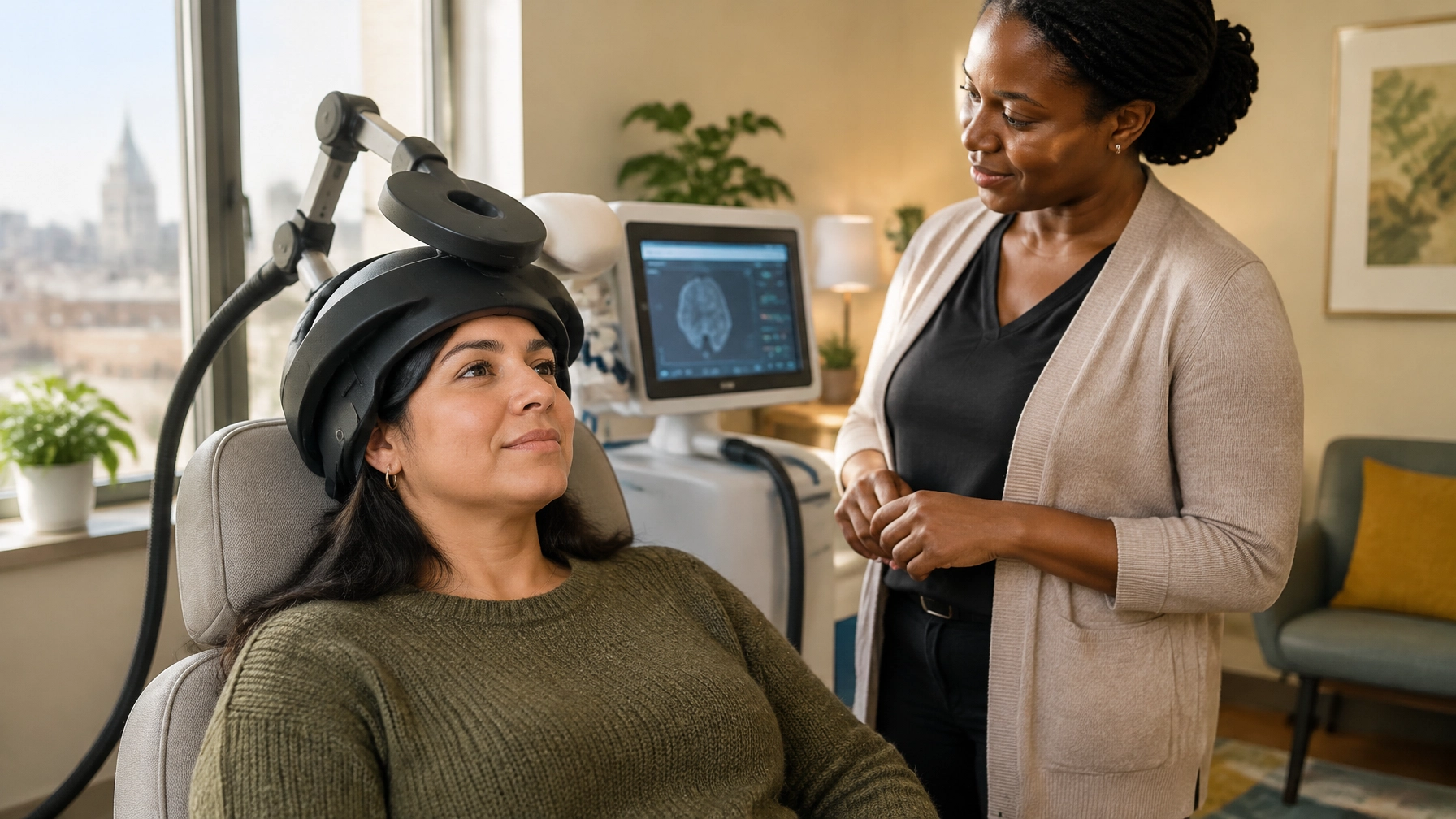
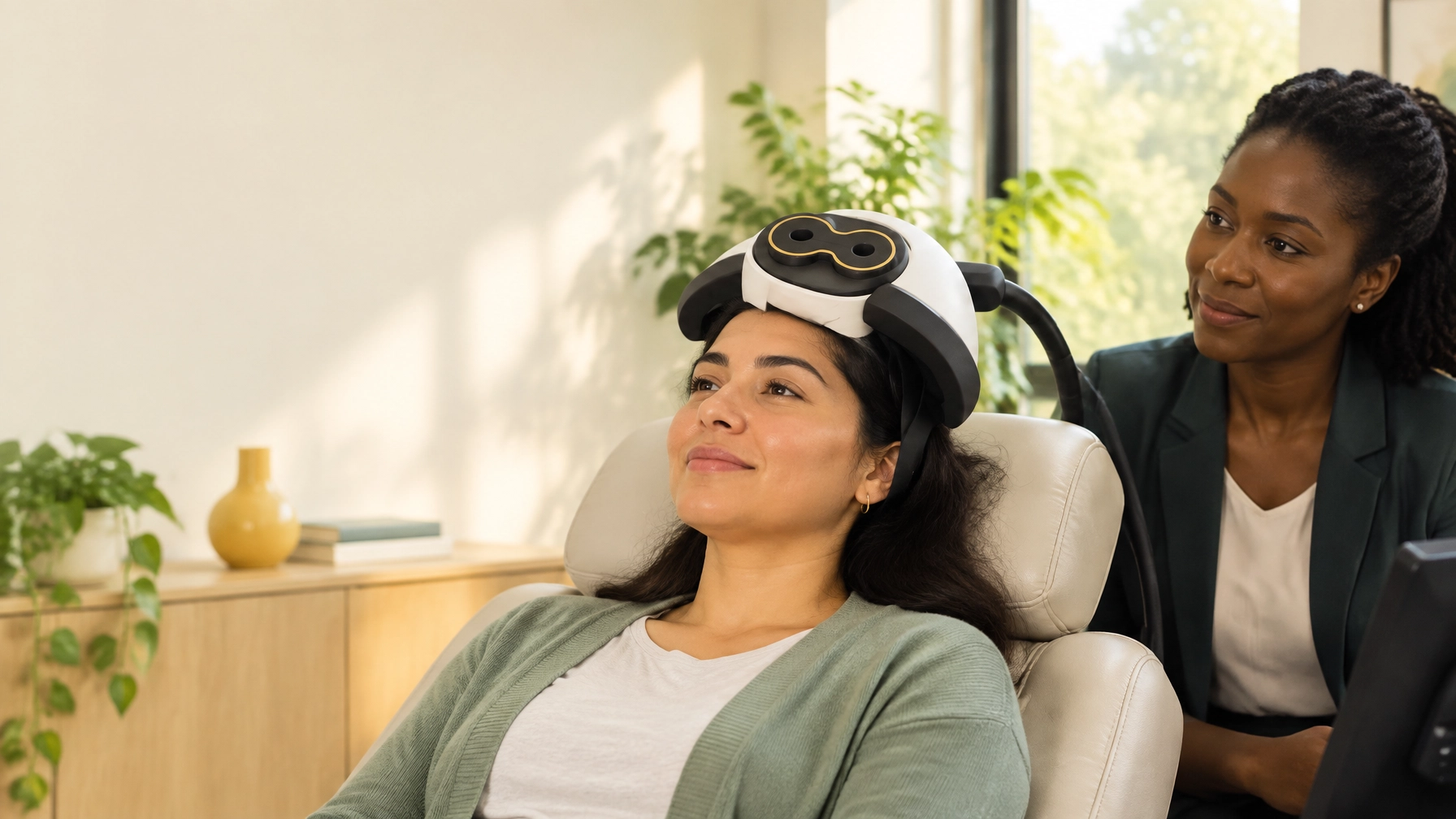
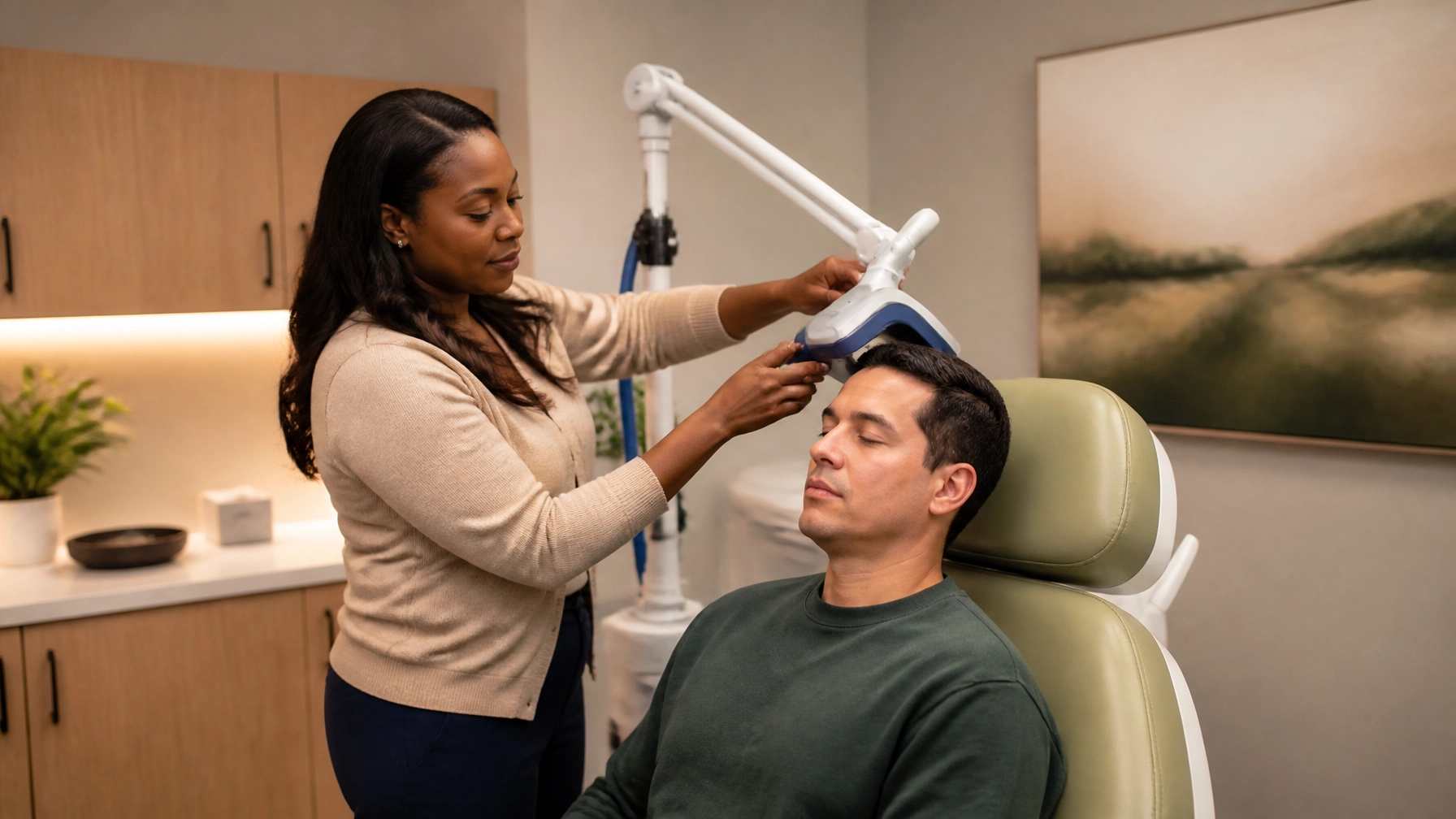
TMS uses a specialized electromagnetic coil to deliver focused magnetic pulses similar in strength to an MRI to these exact regions. By inducing a small electrical current in these hyperactive areas, TMS effectively “quiets” the storm. This neuromodulation allows the brain to regain its natural balance, making it significantly easier for patients to ignore intrusive thoughts and resist compulsions.
The TMS Experience: Non-Invasive and Drug-Free
One of the most significant advantages of TMS is that it is non-systemic. Unlike medications that travel through your digestive system and bloodstream leading to side effects like weight gain or brain fog, TMS only affects the specific area of the brain being targeted.
No Anesthesia: You remain fully awake and alert. You can talk to the technician or watch a show during the 20-minute session.
No Downtime: You can drive yourself to and from our office at 157 Church St, Fl 19 and resume your normal activities immediately.
The “Provocation” Protocol: For OCD, we often perform a brief “symptom provocation” before the pulses begin. By gently activating your specific obsessions, we “prime” the neural circuits, making the TMS pulses even more effective at interrupting the loop.
Success Rates and Long-Term Remission
In 2026, the data for Deep TMS in OCD is stronger than ever. Clinical studies show that over 57% of patients who have failed multiple medications achieve a significant clinical response (a 30% or more reduction in Y-BOCS scores). For many, this represents the transition from being “paralyzed” by thoughts to being able to function at work and in relationships.
If you are also navigating severe depression alongside OCD, we encourage you to read about whether Esketamine can treat your depression. Our team, led by Omolola Aragbada DNP, PMHNP, is expert at sequencing these treatments for maximum benefit.
Note to Readers: If you are experiencing a mental health emergency, please do not rely on this website for immediate help. If you are in the U.S., call or text 988 to reach the Suicide & Crisis Lifeline, call 911, or go to the nearest emergency room. While Light-tunnel Behavioral Health Services provides advanced treatments like TMS and specialized bipolar care, our website content is for educational purposes and does not establish a provider-patient relationship.